
 MENU
MENU Optical Quality Control
 Robotic Systems
 Industrial software development

Vše o průmyslu Highlights KINALI projekcts as good examples of Micro-Automation
In its article on micro-automation, the industry portal Vše o průmyslu highlights KINALI robotic workstations as examples of how small and medium-sized manufacturers (SMEs) can begin automating their production gradually and with lower risk. Our solutions address clearly defined operational challenges and can be integrated into existing production without the need to build an entirely new production line.
Robotisation does not have to begin with an extensive reconstruction of the production facility or the automation of an entire manufacturing process. In many cases, it makes more sense to start with one specific operation that is repeated often, unnecessarily occupies employees or limits production performance.
This may include machine tending, part handling, product loading, testing, or other routine tasks. We refer to these smaller, clearly defined automation projects as micro-automation.

When Does Micro-Automation Make Sense?
Before selecting a robot or another technology, a company should first identify the specific problem it wants to solve through automation. The following questions can help determine whether an operation is a suitable candidate for it:
- Is the same task repeated many times during each shift?
- Does an employee regularly wait for a machine cycle or testing sequence to finish?
- Is the operation monotonous, physically demanding or ergonomically unsuitable?
- Does it cause downtime, errors or variations in quality?
- Is the process sufficiently stable, measurable and clearly defined?
- Would automation free employees to focus on work with higher value work?
If the answer to several of these questions is yes, the operation may be a suitable candidate for a first automation project.
Micro-automation can help reduce downtime, stabilise quality, use employee capacity more effectively and eliminate physically demanding work. Because it is not necessary to automate the entire production process at once, it also reduces the scope of the project and the associated investment risk.
A Cobot Is Only One Part of the Solution
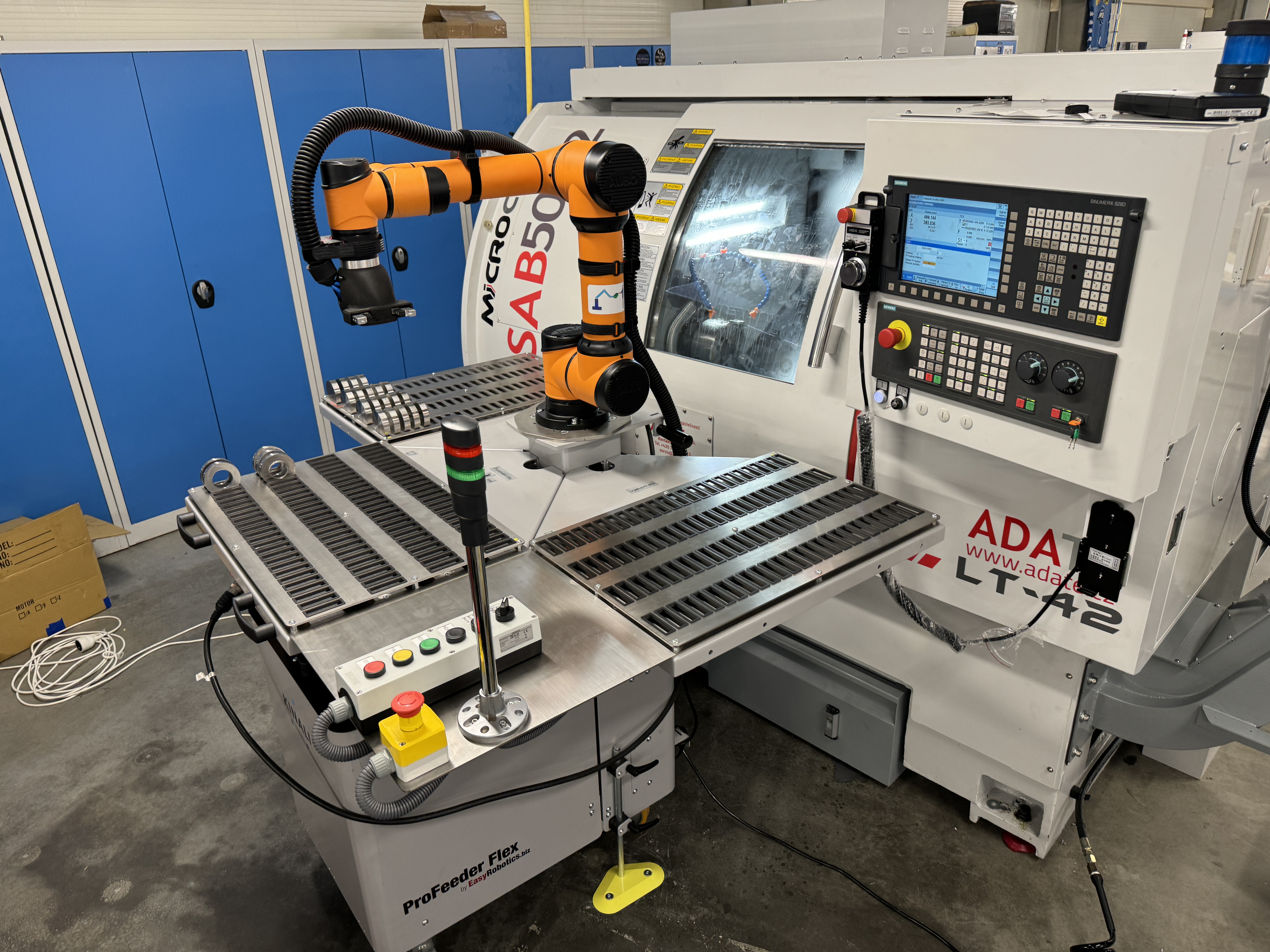
A robot alone does not create a functional automated process. The complete workstation must also account for product handling, communication with machines, safety, control software and integration with surrounding processes.
That is how we design KINALI robotic systems built around AUBO collaborative robots. Rather than simply giving you a robotic arm, we develop a complete solution adapted to the specific conditions of your production environment.
Practical Examples of Micro-Automation
One of the examples featured in the article is the modular robotic workstation developed for Lemmacon. It was originally designed to automate the ultrasonic welding of plastic logistics containers. Thanks to its flexible design, however, the company also uses the workstation to operate a plotter.
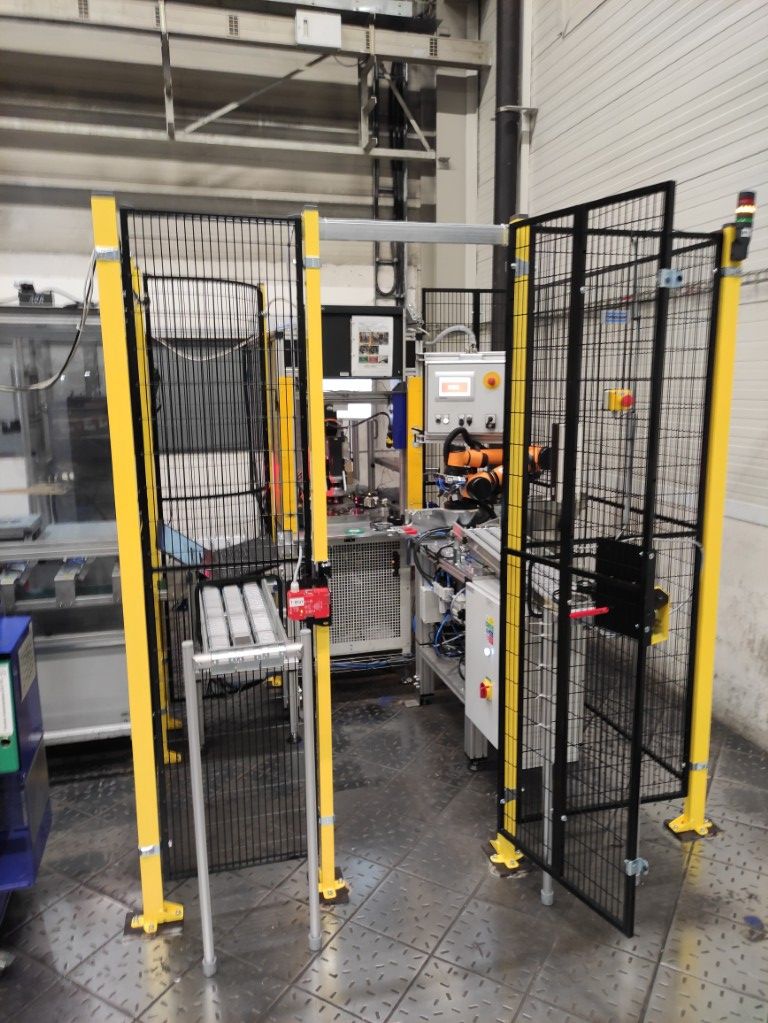
Another example is the automation of a test station in the automotive industry. The robotic workstation took over a monotonous manual operation, reduced unproductive waiting time and was integrated into the existing production process without the need to build a new line.
Both projects demonstrate that companies do not have to begin by automating their entire production facility. A well-selected smaller workstation can solve a specific operational problem, verify the benefits of robotisation in practice and create a foundation for the automation of additional processes.
Read the full article on the Vše o průmyslu portal.